
The AM Top 10: Best Practices for Autonomous Maintenance
July 2025

The AM Top 10
Reliable equipment is essential to meeting production goals, ensuring safety, and maintaining quality. Autonomous Maintenance (AM) empowers machine operators to take ownership of basic maintenance tasks like cleaning, inspecting, and lubricating equipment, so issues are identified before they become major problems. It’s a key pillar of Total Productive Maintenance (TPM) and one of the most effective ways to reduce unplanned downtime while improving equipment longevity.
But implementing AM effectively takes more than just good intentions. It requires structure, communication, and the right tools to build operator confidence and sustain momentum. Based on over a decade of experience supporting both global brands and local manufacturers, here are 10 best practices to make your Autonomous Maintenance program thrive.
1. Start with Cleaning for Inspection
“Clean to inspect, inspect to detect.” Cleaning is the foundation of AM. It’s not just about aesthetics. Removing dirt, oil, and debris reveals hidden issues like leaks, loose bolts, or wear. Establish a daily cleaning routine that gives operators time to closely observe machine conditions. This creates awareness and a sense of ownership from day one.
2. Document Everything to Guard Against Turnover
Manufacturing is facing a growing skills gap. When experienced employees leave, they often take years of hard-earned institutional knowledge with them. Combat this by documenting every AM procedure step-by-step. Clear, visual instructions make it easier for new operators to hit the ground running and ensure consistent results across shifts, regardless of tenure.
3. Train Operators to Own Their Equipment
Empowering operators starts with training. Teach them not just how to run the equipment, but how it works, what can go wrong, and how to spot early warning signs.
Autonomous maintenance is not a one-time event; it’s a maturity journey. Plan a phased skill-building roadmap for operators, from basic care to preventive tasks like lubrication, tension adjustments, and minor part replacements. Continued development builds confidence and deepens team engagement.
With the right skills and knowledge, operators become the first line of defense against unplanned downtime and mechanical failure.
4. Deliver Real-Time Instructions
Operators shouldn’t have to rely on memory to complete detailed maintenance tasks. Providing real-time instructions such as linked documents, videos, or embedded images, can drastically improve execution.
5. Refine Centerlines Through Smart Experimentation and Document
Establishing centerline settings for equipment is part science, part experience. OEM recommendations are a solid starting point, but many manufacturers take a “Run the Target” approach. When a shift performs well, document the setup. Blending both strategies allows you to fine-tune settings that deliver consistent results.
6. Focus on What Matters Most
Too many inspection points can overwhelm your team and reduce compliance. Identify the inspection points that have the biggest impact on performance, whether it’s five points or 20. Apply the lean thinking problem-solving four-step process of eliminate, combine, reduce, and simplify (ECRS) to your CIL (Clean, Inspect, Lubricate) process to keep inspections efficient and effective.
7. Share Insights Through One Point Lessons
Learning never stops with AM. When operators or technicians uncover a useful tip or common failure mode, capture it in a One Point Lesson (OPL). These short, visual lessons promote knowledge sharing across teams and reinforce a culture of continuous improvement. It also helps with your efforts to standardize work so that your hard-won institutional knowledge doesn’t walk out the door when employees retire or leave.
8. Adopt SOPs and Use Visual Controls to Guide and Alert
Out of sight often means out of mind. Help operators spot issues instantly by using red/green indicators on gauges and color-coded tags for CIL checklists. Visual cues on equipment can show exactly where to inspect, making daily maintenance faster and more foolproof.
Standard operating procedures (SOPs) ensure consistency. Document daily, weekly, and monthly AM tasks in clear, visual formats. Think checklists with photos or color-coded tags.
Labels, gauges, arrows, and color-coding help operators instantly understand what “normal” looks like. Visual controls reduce guesswork, improve safety, and speed up troubleshooting. When done well, they make complex systems easy to monitor and help operators spot issues instantly.
Standardizing work helps maintain quality over time, even with staff turnover or shift changes.
9. Standardize and Enhance Audits
A structured audit process reinforces expectations. Use 5S (Sort, Set in Order, Shine, Standardize, and Sustain) audit forms with scoring and checklists to ensure consistency and visibility. Digital audit tools can capture richer data like photos and timestamps and automatically score results, giving you clearer insight into team performance over time.
10. Strengthen Communication Between Operators and Maintenance
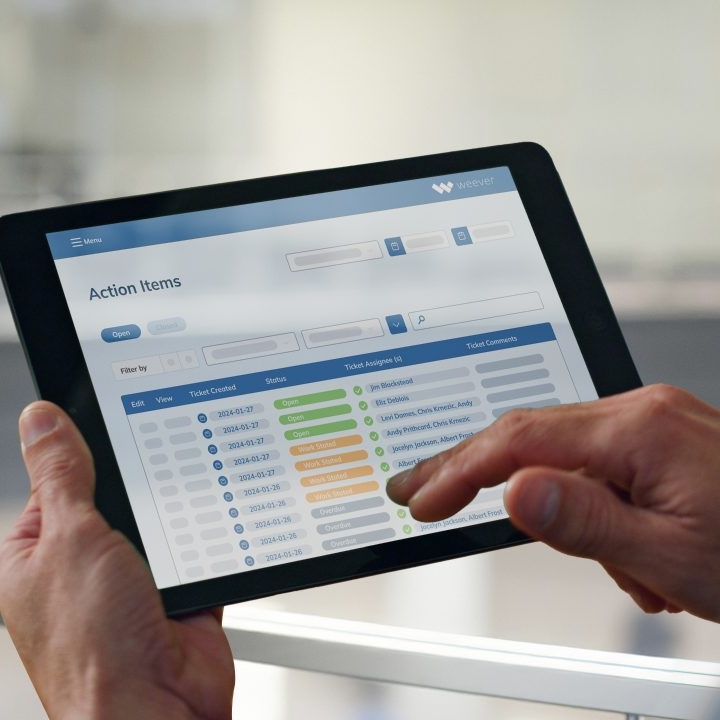
Autonomous Maintenance works best when there’s trust and collaboration between operators and technicians. Ensure there’s a simple, trackable way for operators to flag issues, whether by using visual tags or digital systems. If problems go unresolved, participation drops. Use software to log, monitor, and resolve reported issues promptly to keep morale and accountability high.
Building an effective Autonomous Maintenance program is a team effort that pays dividends in uptime, safety, and operator engagement. With the right practices and tools in place, your operators become more than machine users. They become key contributors to operational excellence.
Contact Weever for a demo and discover how our software can help you enable Autonomous Maintenance
Continue Reading






"Having cloud-based forms on devices around the facility makes them so much more accessible, which makes it painless for operators to quickly provide a report."
Johanna Velez, VP Quality Assurance

"Weever is really user friendly and will have a massive positive impact on our operations and training team."
Mel Cadle - Op Ex Lead Process Engineer


"It's shifted our safety culture because now we are much more focused on what we should be looking at."
Kody Crossen, Operations Manager of EHS